
Authentic Nepal Tours -14 Days
Trip Highlights of Authentic Nepal Tours -14 Days
- Visit Kathmandu’s stunning historic palaces and temples.
- At a Panauti homestay, enjoy the wonderful hospitality of the Nepali people.
- Trek across the Annapurna region’s ethnic villages.
- Learn about the long history of craftsmanship in Patan.
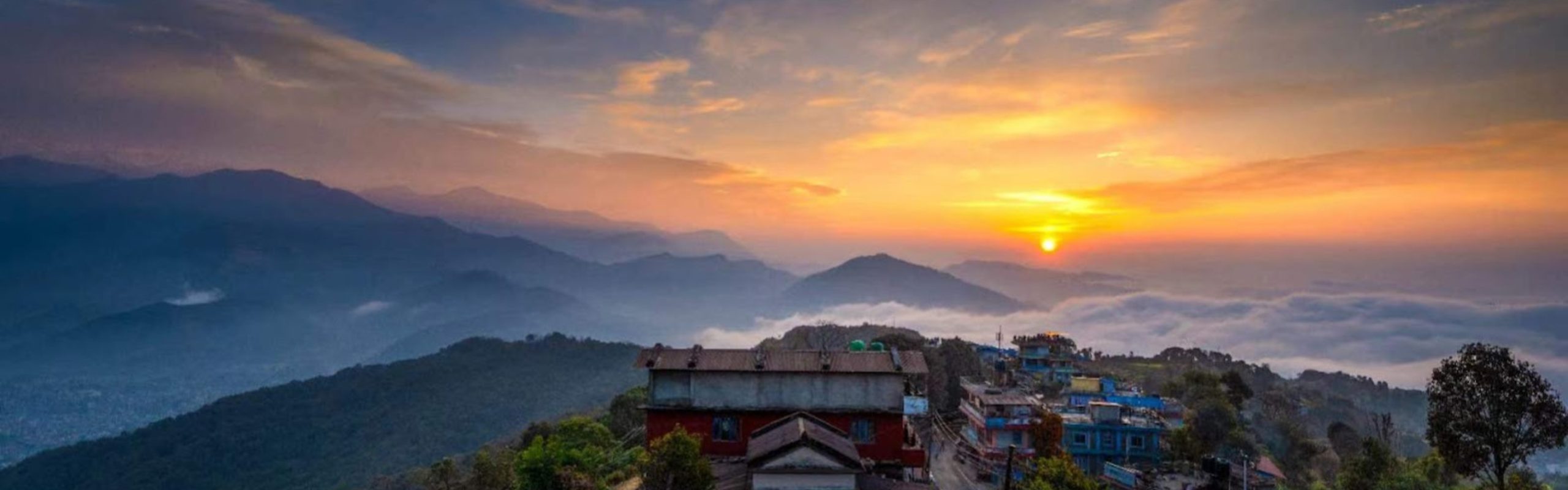
- Visit the tranquil Bandipur, a former prosperous Newari town.
Itinerary of Authentic Nepal Tours -14 Days
Day 1: Arrive Kathmandu
You’ll be picked up at the airport and driven to your hotel so you may check in and drop off your things. Depending on what time you land in Kathmandu, you might have some free time before eating your first meal in Nepal at one of our suggested restaurants.

Day 2: Sightseeing around Kathmandu
From the well-known tourist area of Thamel, you may walk to Swayambhunath in about 30 minutes (or take a short cab journey from elsewhere in Kathmandu). Great views of the entire city may be seen at Swayambhunath, a sacred site for Tantric Buddhists in Nepal. You’ll soon realize why the area is known as the “monkey temple,” as the cute animals are just as fascinating as the elaborate buildings.
After lunch in Thamel, take a taxi back to the city’s center and proceed to the Kathmandu Durbar Square. From pagoda temples built in the sixteenth century to the early twentieth-century neo-classical Gadi Durbar Palace, this public area is home to a diverse range of architectural styles. When locals visit the temples in the evening to worship, the atmosphere is very eerie.

Day 3: Homestay Panauti
Drive this morning to Panauti, a little settlement outside of the Kathmandu Valley (1-2 hours). The majority of the population in Panauti is made up of Newars, who were the first inhabitants in the Kathmandu Valley. Some of the most well-preserved Newari architecture in all of Nepal may be found in the town center. Panauti was allegedly constructed on a single piece of rock, making it exceptionally safe in the case of an earthquake.
A network of homestays maintained by local women exists in Panauti. Visitors can experience daily living by staying in a comfortable guest room. Your hostess will offer you a tour of the neighborhood and a cooking lesson in Nepali cuisine in her home kitchen.

Day 4: Panauti and Namo Buddha
Today, drive up to Namo Buddha, a little settlement in the hills close to Panauti, to learn more about the surroundings around that city. The golden Tibetan Buddhist monastery at Namo Buddha, one of the holiest Tibetan Buddhist sites in Nepal, is spectacular. On a clear day, the Himalayas can be seen in the distance, even though the stupa there is small compared to those in other sections of Kathmandu. Lunch should be consumed at the Namo Buddha Resort. This restaurant is renowned for its outstanding vegetarian cuisine and has its own organic kitchen garden.

Day 5: Morning tour of Bhaktapur, afternoon fly to Pokhara
After breakfast, depart from your Panauti homestay and travel (approximately an hour) to Bhaktapur. The majority of the remarkable religious structures, including the five-story Nyatapola Temple, the highest temple in the Kathmandu Valley, are still surviving despite the town’s heavy damage from the 2015 earthquake. As a result, there is a lot to see here. Visit the sizable squares where conventional clay pots are spread out to dry inthe sun and dry some juju dhau (king curd), a creamy yogurt regarded as the best in the nation.
After noon, depart Bhaktapur for your journey to Pokhara. The flight is brief but quite beautiful. Request a seat on the left side of the aircraft.
After checking into your hotel, have supper and beverages by the lake while admiring Machapuchare’s flawless fish-tail peak on one side.

Day 6: Adventure around Pokhara
Spend today taking advantage of Pokhara’s more sedate activities, such as taking a yoga class, rowing a small boat on the tranquil Phewa lake, getting a massage at one of the town’s many spas, or swimming in a hotel pool.

Day 7: Trek to Bhumdi (1520 meters)
Take a boat across Phewa Lake to the other side, then hike up to the World Peace Pagoda to start the day. Beautiful views of the Annapurna Himalaya and Pokhara may be seen from here.
The remainder of the trip to the village of Bumdi will be a gentle uphill and downhill climb after leaving the pagoda. You can learn about the native Magar and Brahmin people and gain an understanding of Nepalese village and mountain life during your overnight stay in Bumdi.

Day 8: Bumdi to PanchaseBhanjyang (2065 meters), drive to Pokhara
Your journey today will take you through forests with a diverse population of birds and trees. The national flower of Nepal, the rhododendron, blooms in shades of pink, red, and purple in the spring. Through clearings in the jungle, the Annapurna range, which includes the three tallest mountains in the world—Annapurna I, Dhaulagiri, and Manaslu—will be visible.
Once you reach PanchaseBhanjyang village, a car will transport you back to Pokhara.

Day 9: Drive to Bandipur, Overnight in Bandipur
East of Pokhara, in about three hours’ drive, is Bandipur. At 1030 meters, it is a little village positioned high on a mountain. You may stroll around the red-brick temples and traditional old residences without experiencing the same stress from traffic as in Kathmandu because the town’s heart is pedestrianized. Bandipur once had a significant garment manufacturing industry and served as a commerce hub between India and Tibet. Stay at The Old Inn Bandipur, a red-brick Newari townhouse that has been refurbished and filled with charming details.

Day 10: Around Bandipur
Reading a book while unwinding on a sunny patio with views of the mountains is a delightful activity in Bandipur. There are several quick walks you can do close to the town, though, if you’re prepared for something a little more strenuous. Even the Siddha Gufa Caves are accessible by way of a woodland trail. Please remember to bring your own flashlight.

Day 11: Visit Manakamana by Cable Car, Onwards to Patan
The country’s primary east-west route, the Prithvi Highway, will be followed on the journey back to Kathmandu today. From the bottom of the valley, the route gives stunning views of the sky while largely running alongside to the Trisuli River.
Stop in Kurintar along the way and ride the cable car up to Manakamana, where there is a well-known temple. Despite being restored after being destroyed in the 2015 earthquake, the Manakamana temple continues to draw numerous pilgrims from India and Nepal who come because they think that wishes expressed here would undoubtedly come true. The trip on the cable car is really beautiful, hanging above the river and terraced rice fields. On a clear day, the town offers views of the Annapurna Himalaya.
Arrive in Patan, which is located south of the Kathmandu Valley, in the early evening. Stay at one of its exquisite boutique hotels.

Day 12: Patan Craft Tour
Patan is one of the three major ancient cities of the Kathmandu Valley (Bhaktapur and Kathmandu being the other two), and as such, houses a wealth of cultural and craft traditions. Taking a craft-focused tour of Patan will allow you to visit the workshops of wood carvers, metal workers and painters, and learn about these traditions that are not only surviving in twenty-first century Nepal but actually flourishing. As part of the tour, visit the superb Patan Museum, which is housed in a wing of the renovated palace in the Patan Durbar Square. The collection houses numerous sacred artifacts and informative displays on Nepali art and architecture.

Day 13: The major religious traditions of Nepal: Hinduism and Buddhism
Through two well-known locations, you will learn about the two main religions of Nepal—Hinduism and Buddhism—today. Although Buddhism also has a significant influence on Nepali culture and many individuals follow elements of both religions, the majority of Nepalis are Hindu.
Visit the Boudhanath Stupa in the morning. The vicinity is a center for Tibetan life and culture in Nepal, and this location is regarded as the holiest Tibetan Buddhist place outside of Tibet. The massive white dome is topped with a shining golden top that features the Buddha’s piercing eyes and was reconstructed after being damaged in the 2015 earthquake.
After eating your meal while admiring the stupa, visit the neighboring Pashupatinath Temple. The holiest Hindu destination in Nepal, this network of temples, cremation ghats, and odd sadhus (holy men) may be found along the river. Visitors are deeply affected by Pashupatinath’s beautiful architecture and solemn yet joyful atmosphere.
Visit the neighboring Pashupatinath Temple after lunch while admiring the stupa. This is the holiest Hindu place in Nepal, and it contains a complex of temples, cremation ghats, and odd sadhus (Hindu holy men) along a river. Due to its beautiful architecture and solemn yet joyful ambience, Pashupatinath makes a lasting effect on tourists.

Day 14: Depart Kathmandu
You might have some time before being driven to the airport for an early breakfast, some last-minute shopping, or some sightseeing in Kathmandu, depending on when you depart.

Frequently Asked Questions
Spring (March–May) and autumn (September–November) offer the clearest mountain views, pleasant temperatures, and ideal trekking conditions.
The trip is easy to moderate. City tours involve light walking, and the Panchase trek is a gentle hill hike suitable for beginners with basic fitness.
No. The Panchase route is a soft trek with gradual ascents, comfortable lodges, and professional guides, making it perfect for first-time trekkers.
You’ll stay in boutique hotels, heritage properties, a traditional village homestay in Panauti, and simple yet comfortable lodges during the trek.
Yes. A licensed cultural guide accompanies sightseeing tours, and an experienced trekking guide supports you during the hike.
This itinerary includes a scenic domestic flight to Pokhara for comfort and time efficiency. Overland options are available on request.
Daily breakfast is included. Full board meals are provided during the homestay and trekking days. Lunch and dinner in cities are flexible for independent dining.
Yes. The route is safe and non-technical. Families and active seniors regularly enjoy this trek at a relaxed pace.
Absolutely. Paragliding, boating, ziplining, helicopter flights, and wellness experiences can be arranged as optional add-ons.
Comfortable walking shoes, light layers, a warm jacket for cooler evenings, sun protection, and a small daypack for the trek.
Yes. Comprehensive travel insurance covering medical care, trip delays, and trekking activities is strongly recommended.
Yes. We can personalize your journey with luxury hotels, private experiences, added destinations, or extended stays.