
Lobuche Peak Climbing
Trip Highlights of Lobuche Peak Climbing
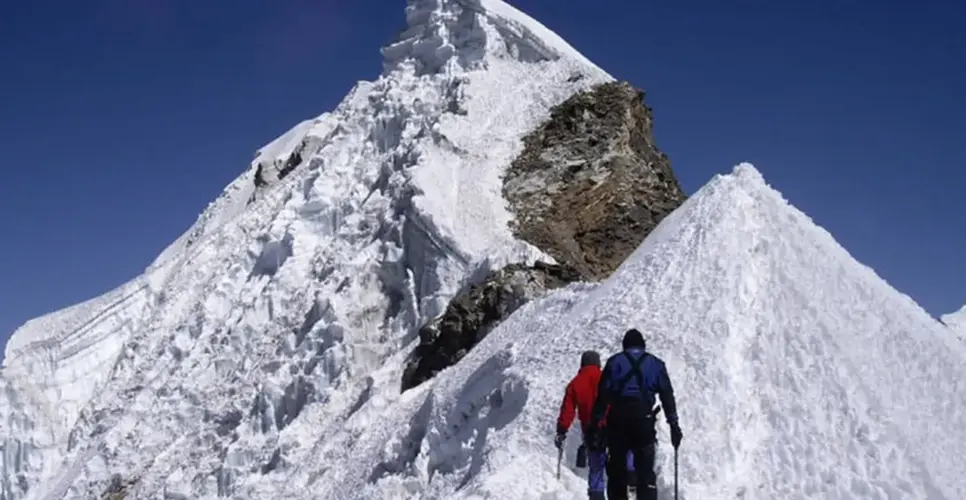
- Hike Lobuche Peak (6,119 meters) using professional climbing instructors.
- Explore Everest Base Camp and trek to Kala Patthar.
- Hike the Sherpa villages and Everest.
- Acclimatize in Namche bazaar and Dingboche.
- Spend the night in Lobuche Base Camp and High Camp.
- Get to know the simple mountaineering techniques prior to the summit.
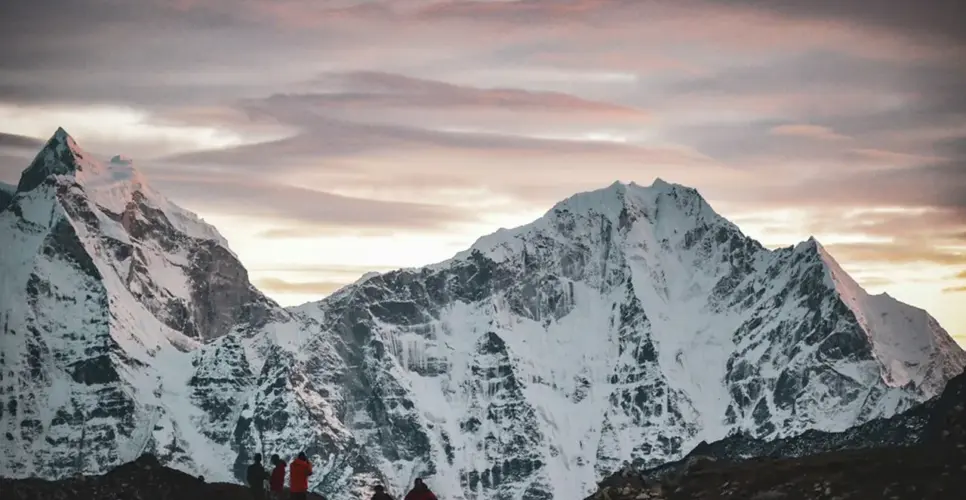
- See Everest, Lhotse, Nuptse, Ama Dablam and Makalu.
Overview of Lobuche Peak Climbing
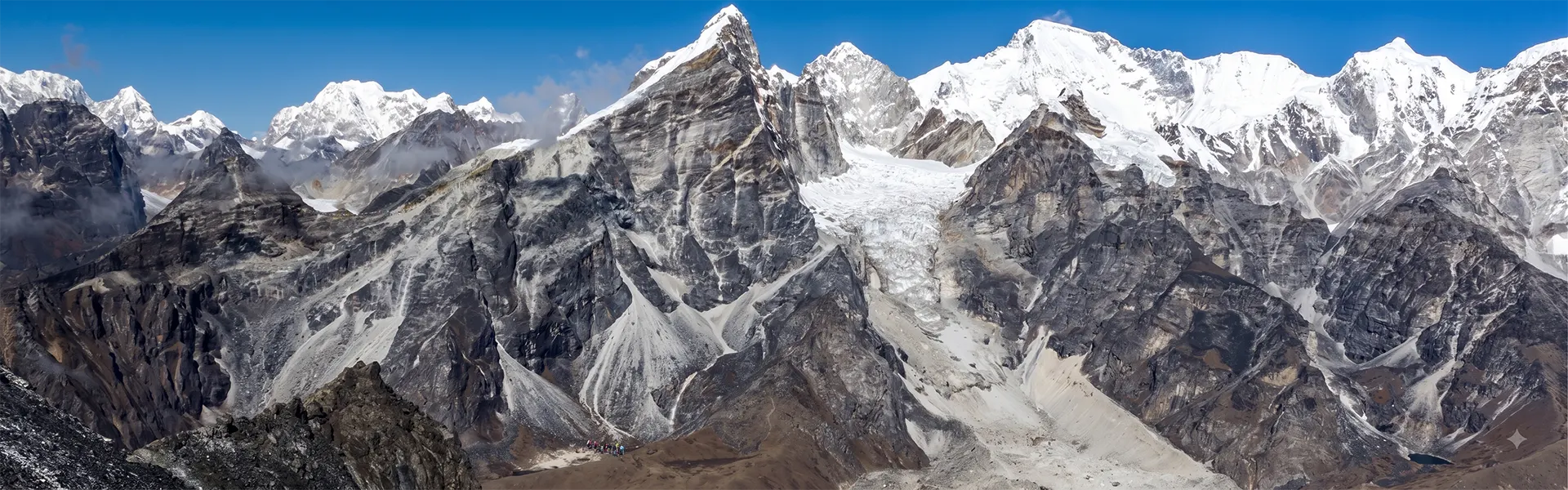
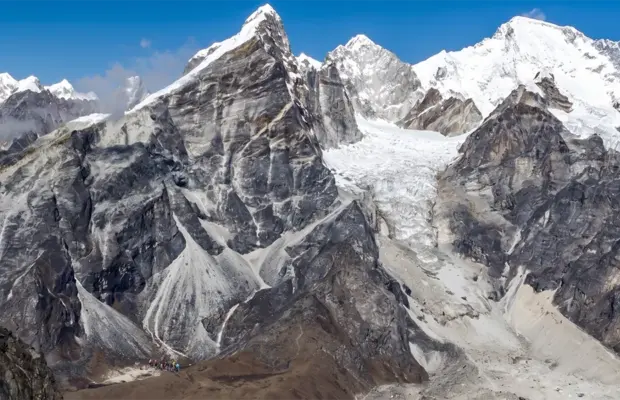
Lobuche Peak Climbing is a fulfilling Himalayan climbing adventure that combines the classic Everest Base Camp trek with the ascent of Lobuche Peak, one of Nepal’s challenging trekking peaks. Standing at 6,119 meters, Lobuche Peak is more challenging than beginner trekking peaks and is highly appropriate when an individual wants to make the next step of high altitude mountaineering. The expedition uses the popular Everest route but diverts at the end of the route to another lesser used climbing route to form an experience that involves trekking, acclimatization and technical climbing.
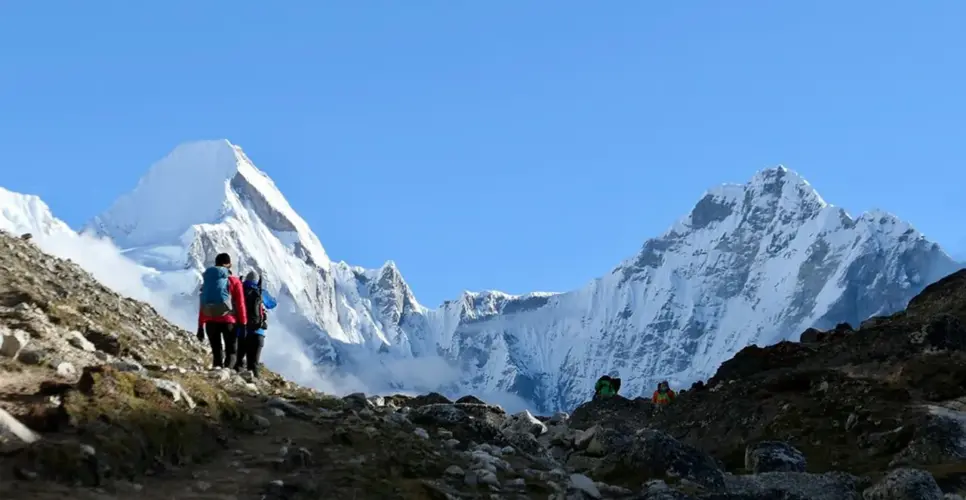
Lobuche Peak Climbing Package commences with your arrival at Kathmandu and time is spent in exploring the cultural places of Kathmandu and final preparations before setting off into the mountains. The trek will start with a scenic flight to Lukla where we will be following the Dudh Koshi Valley: Phakding, Namche Bazaar, Tengboche, Dingboche and Lobuche. You will also get to enjoy the Sherpa culture, ancient monasteries and ever changing views of Everest, Ama Dablam, Lhotse, Nuptse, and many other Himalayan peaks along the way.
Proper acclimatization is an important part of the expedition. Rest days at Namche Bazaar and Dingboche allow our body time to adapt to the rising height, before we proceed higher into the Khumbu region. You will also visit Everest Base Camp and Kala Patthar, where you will be able to stand and see the highest mountain in the world and get to see the panoramic view of the Everest region one of the best viewpoints available.
The trip is more challenging beyond Lobuche Village since we will climb Lobuche Base Camp and High camp. Prior to the high altitude attempt, our seasoned climbing guides give us practical training on how to use crampons, harnesses, helmets, ascenders, fixed ropes among other requisite climbing gears. The preparation is beneficial in creating confidence prior to climbing snow and ice, and rocky areas.
Summit day is the highlight of the Lobuche Peak Climbing Itinerary. The summit is rewarded by panoramic views of Everest, Lhotse, Nuptse, Pumori, Ama Dablam, Makalu and an endless array of other surrounding summits. A successful climb is followed by the descent in the same direction via Pangboche, Namche Bazaar and Lukla and this gives time to look back at the accomplishment and spend the remaining days in the Khumbu.
In Nepal Wanderlust Treks, safety, good acclimatization, and support to every individual will be a priority during the trip. Our Lobuche Peak Expedition offers a safe, well-organized and enjoyable experience in the Everest region whether you are planning further advanced Himalayan climbs, or are seeking your next mountaineering challenge.
Itinerary of Lobuche Peak Climbing
Arrival at Kathmandu Airport (1,400m/4,593ft)
Welcome to Nepal. Upon your landing at Tribhuvan International Airport, we will welcome you and take you to your Kathmandu hotel. After checking in, you can unwind after your trip or go around the local streets provided that you have time.
We will have a briefing on the expedition in the evening, introducing the expedition, about the itinerary, and inspecting the necessary climbing equipment. Overnight stay in Kathmandu.
Kathmandu Valley Tour and Trip Preperation
Today, we will visit some of Kathmandu Valley’s UNESCO World Heritage Sites, including Pashupatinath Temple, Boudhanath Stupa, and Kathmandu Durbar Square. The tour will provide an insight into Nepali culture, history, and religion.
We will then finish the last preparations of climbing later, check the personal equipment and ensure everything is set and is ready to go on the trip to the Everest region. Overnight stay in Kathmandu.
Fly from Kathmandu to Lukla (2,860m/9,383ft) and Trek to Phakding (2,610m/8,563ft)
An early morning flight takes us to Lukla, where the Himalayan adventure begins. We will walk with our trekking team on the trail along the Sherpa village, cultivated areas and pine forests along Dudh Koshi River.
The walk is mostly gentle with several suspension bridges along the way. By afternoon we arrive at Phakding where we can rest before going further into the Everest area.
Trek from Phakding to Namche Bazaar (3,440m/11,286ft)
After breakfast, we will continue along the Dudh Koshi River, crossing several suspension bridges before entering Sagarmatha National Park. The trail continues past Monjo and Jorsalle to the last uphill climb to Namche Bazaar.
When there is a clear weather, the initial glimpses of Mount Everest can be seen as one ascends the mountain. Namche Bazaar is the main trading center of the Khumbu region, where we spend the night.
Acclimatization Day. Visit Khumjung Village and Hotel Everest View (3,880m/12,730ft)
To climb successfully we will have to acclimatize and this will involve a hike to Hotel Everest View and move on to the traditional Sherpa village of Khumjung. The trail offers wonderful glimpses of Everest, Ama Dablam, Lhotse and the surrounding mountains.
After exploring the village, we will return to Namche Bazaar for the afternoon. This slow increase in altitude, and a subsequent decrease in altitude overnight, allow our bodies to adapt to the rising altitude.
Trek from Namche Bazaar to Tengboche (3,860m/12,664ft)
We will leave Namche Bazaar and take a scenic route where we will have a view of Everest, Lhotse, Ama Dablam and Thamserku. The trail then goes down to Phunki Tenga and upwards through rhododendron and pine forests to Tengboche.
Tengboche is home to the largest monastery in the Khumbu region and is surrounded by impressive mountain scenery. If time allows, we can visit the monastery before settling into our teahouse for the night.
Trek from Tengboche to Dingboche (4,360m/14,305ft)
The trail then goes through Deboche, and crosses the Imja Khola on a suspension bridge. We will proceed to Pangboche which is among the oldest Sherpa villages in the Everest region and then proceed along the valley to Dingboche.
With the increasing altitude, open alpine landscapes with beautiful mountain scenery slowly replace forests. Dingboche is a peaceful village surrounded by stone walls and towering Himalayan peaks.
Acclimatization Day in Dingboche (4,360m/14,305ft)
Today is another important acclimatization day before climbing higher into the Everest region. We will hike to Nangkartshang Peak, a popular viewpoint offering wide views of Makalu, Ama Dablam, Lhotse, and Island Peak.
We will then go back to Dingboche and have lunch and a relaxing afternoon after spending some time in the viewpoint. This slow rise in altitude is useful to condition us to the elevated parts of the journey.
Trek from Dingboche to Lobuche (4,910m/16,109ft)
Today’s walk follows a gradual ascent through alpine terrain with excellent mountain views. On our way to Lobuche we will cross the Thukla Memorial where there are stone monuments of climbers who died in the Himalayas.
The trail becomes steeper after the memorial before leveling out near the village. Arriving in Lobuche, we rest and prepare for our visit to Everest Base Camp on the following day.
Trek from Lobuche to Gorak Shep (5,160m/16,929ft) via Everest Base Camp (5,364m/17,598ft)
Following breakfast, we will walk across rocky glacial moraine to Gorak Shep before continuing to Everest Base Camp. The moment when someone stands at the base of the tallest mountain on the earth is a memorable and a significant part of the expedition.
We will visit Base Camp, take pictures and come back to Gorak Shep where we will spend the night. Tomorrow morning, another famous viewpoint awaits before the climbing journey continues.
Trek from Gorak Shep to Lobuche (4,910m/16,109ft) via Kala Patthar (5,545m/18,192ft)
We will hike to Kala Patthar, the summit of the expedition before sunrise, where we will have clear weather and enjoy panoramic views of Everest, Nuptse, Pumori, and the surrounding Himalayan peaks. This is one of the most memorable moments of the journey, owing to the early morning light.
After descending to Gorak Shep for breakfast, we will continue back to Lobuche. The lower elevation provides a comfortable place to rest before beginning the climbing section of the expedition.
Trek from Lobuche to Lobuche Base Camp (5,000m/16,404ft)
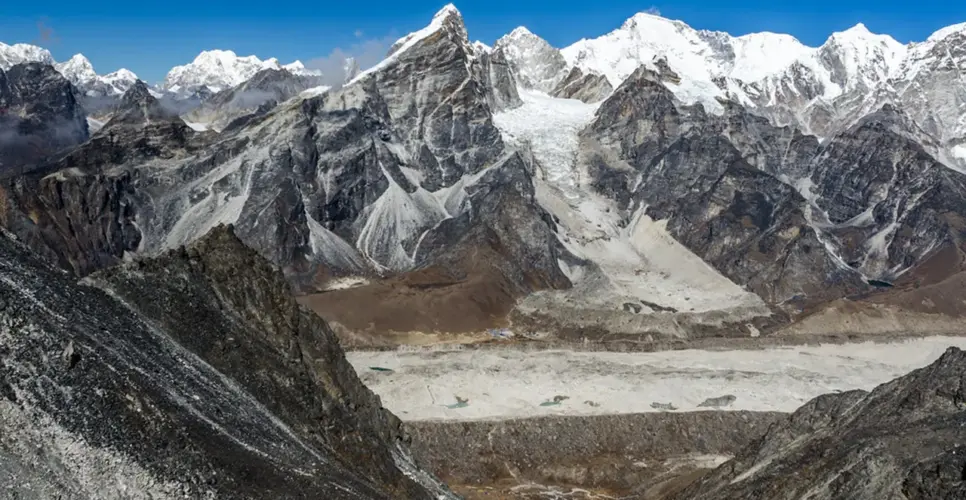
We will leave the main trekking trail and follow glacial moraine and rocky trails towards Lobuche Base Camp. The higher we climb, the more the terrain becomes rugged and with stunning views of Lobuche Peak and the nearby mountains.
Once we arrive at Base Camp, our climbing team will assist in setting up equipment and making the campsite. The rest of the day is spent in rest and last minute preparations before proceeding to High Camp.
Trek from Lobuche Base Camp to High Camp (5,600m/18,373ft)
Today’s climb is shorter but steeper as we will ascend over rocky terrain toward Lobuche High Camp. The route requires careful footing and offers increasingly wide views of the Khumbu Glacier and surrounding peaks.
Once at High Camp, time will be available to assemble climbing equipment, check the summit plan and sleep before the pre-dawn start. An early night’s sleep is important for tomorrow’s summit attempt.
Summit Lobuche Peak (6,119m/20,075ft) and Return to High Camp (5,600m/18,373ft)
Our summit attempt will start long before dawn because we will be ascending rocky slopes, snowfields, and fixed rope sections with the help of our professional climbing team. Careful pacing and teamwork are essential throughout the ascent.
Reaching the summit rewards us with spectacular views of Everest, Lhotse, Nuptse, Makalu, Ama Dablam, and many surrounding peaks. After celebrating our achievement, we will descend safely to High Camp for a well deserved rest.
Trek from Lobuche High Camp (5,600m/18,373ft) to Pangboche (3,910m/12,828ft)
Then we will take a walk to Lobuche Village after breakfast and then rejoin the main trail of the Everest trekking. The path goes on to Thukla and Dingboche as the terrain slowly evolves with the loss of height.
After crossing the Imja Khola, we move on to Pangboche, where a pleasant warm climate and lower altitude serve as a nice refuge to rest in after the successful summit experience.
Trek from Pangboche to Namche Bazaar (3,440m/11,286ft)
We will leave Pangboche and head down through Deboche and then to Tengboche Monastery. This path leads to Phunki Tenga, and then ascends gradually back to Namche Bazaar, over pine and rhododendron forest.
The classic path gives one another chance to appreciate the landscape and mountain scenery which renders the Everest region so extraordinary. Arriving in Namche Bazaar, we can relax and celebrate the successful completion of the climb.
Trek from Namche Bazaar to Lukla (2,860m/9,383ft)
Today we will trace the Dudh Koshi Valley all the way to Lukla and will go through villages of Monjo, Jorsalle, Benkar and Phakding. The final day of trekking is an enjoyable one, with several suspension bridges and riverside trails.
The last upward section brings us to the same location at Lukla where we began our Himalayan expedition. On arrival to the lodge, we will thank our guides and porters and have a last evening in the mountains.
Flight from Lukla to Kathmandu
A flight at an early morning day takes us back to Kathmandu giving us one last glimpse of the snow covered Himalayan peaks. After landing, we will transfer to the hotel, where the remainder of the day is free for rest or personal activities.
It is possible to go to local markets, have a drink at a cafe, or just have a rest after the expedition.During evening, you may use the time to celebrate your success with a farewell dinner or you can prepare how to leave.
Final Departure from Kathmandu
Today is the end of your Lobuche Peak Climbing expedition. We will now take you to Tribhuvan International Airport, where you will be resuming your journey according to your flight schedule.
We will assist you in flight arrangements and make a good journey back home. We hope the memories of climbing Lobuche Peak and exploring the Everest region remain with you for many years.
Includes/Excludes
What's Included?
- Airport arrival and departure transfers by private vehicle.
- Two nights hotel accommodation in Kathmandu with breakfast.
- Kathmandu to Lukla and Lukla to Kathmandu domestic flights.
- Lobuche Peak Climbing Permit.
- Sagarmatha National Park Entry Permit.
- Khumbu Pasang Lhamu Rural Municipality Permit.
- Experienced trekking guide and licensed climbing guide.
- Porter service (one porter for every two trekkers).
- Three meals a day during the trek and climb.
- Tea house accommodation during the trek.
- Camping accommodation at Base Camp and High Camp.
- Group climbing equipment and fixed ropes.
- Basic climbing training before the summit attempt.
- First aid kit carried by the guide.
- Government taxes and company service charges.
What's Excluded?
- International airfare.
- Nepal entry visa fee.
- Lunch and dinner in Kathmandu.
- Travel insurance with emergency helicopter evacuation coverage.
- Personal climbing equipment.
- Personal expenses (drinks, Wi-Fi, charging, laundry, hot showers, etc.).
- Tips for guides, climbing guides, and porters.
- Expenses caused by flight delays, bad weather, or itinerary changes.
Essential Information - Lobuche Peak Climbing
Best Time for Lobuche Peak Climbing
Lobuche Peak Climbing is best done during spring (March to May), and autumn (September to November). These months provide stable weather, clear skies, and favorable climbing conditions in the Everest region. Spring has good weather with rhododendron forests in lower areas that are in bloom and autumn has cold mountain scenery and dry trails.
The Lobuche Peak Climbing Package can also be completed during winter by experienced climbers who are prepared for colder temperatures and snow. June to August is the monsoon and is usually not an appropriate season as it is likely to rain, cloudy and the trails may be slippery and therefore trekking and climbing will be difficult.
Lobuche Peak Climbing Difficulty
Lobuche Peak Climbing is regarded as a difficult trekking peak which needs good physical fitness, endurance, and prior experience of high altitude trekking. Although it is classified as a trekking peak, the climb includes steep sections, fixed ropes, snow, ice, and exposed ridges that demand careful movement.
Our climbing guides train us and offer practical training before the summit attempt on crampons, harnesses, helmets, ascenders, and fixed ropes. The Lobuche Peak Expedition also involves adequate acclimatization in Namche Bazaar and Dingboche to help minimize the chances of altitude related issues.
Accommodation and Meals
During the Lobuche Peak Climbing Itinerary, accommodation is provided in comfortable local teahouses from Lukla to Lobuche Village. At Lobuche Base Camp and High Camp, accommodation is provided in camping tents prepared by our climbing team.
During the trekking and climbing days, breakfast, lunch, and dinner are provided. Nepali, Tibetan and continental foods are served in most teahouses and freshly prepared food is served at the camps. Eating well and staying hydrated are important for maintaining energy during the expedition.
Transportation
The Lobuche Peak Climbing Package begins with a scenic flight between Kathmandu and Lukla, offering impressive views of the Himalayan range. During the busy trekking seasons, flights to Lukla may operate from Ramechhap instead of Kathmandu depending on airline schedules and weather conditions.
Airport transfers and sightseeing in Kathmandu are provided by private vehicle. After the expedition, all the travel is on foot in the Everest region until the final journey back to Lukla.
Travel Insurance and Safety
Lobuche Peak Climbing requires travel insurance, which must cover trekking and climbing above 6,000 meters, emergency helicopter evacuation and medical care. Comprehensive insurance gives you peace of mind in case of any unexpected situations during your expedition.
Your safety is our first priority in the Lobuche Peak Expedition. We have a well-planned itinerary with gradual acclimatization and our experienced guides monitor the condition of each climber in a daily basis. If the summit is not safe because of weather or trail conditions, our team will change the itinerary to ensure the safety of all climbers.
Most Asked Questions by Travellers
The typical Lobuche Peak Climbing Itinerary consists of 19 days that comprise of acclimatization, the summit climb and the descent.
Yes. A professional climbing instructor will be with you throughout the climbing part and will help you in terms of safety, navigation, and rope management.
Group climbing equipment such as ropes and safety gear is provided. In Kathmandu, personal climbing gear is available on rent.
Yes. The majority of the teahouses have charging opportunities at a fee. Charging is limited at higher elevations.
Yes. Bottled water and boiled drinking water are available at most teahouses. It is also advisable to use water purification pills or filter bottle.
Most villages have mobile network and Wi-Fi, although the network is less strong and reliable at high altitudes.
The climbing schedule will be modified by your guide in case the conditions are unfavorable. The priority is always on safety and not to reach the summit.
Yes. Most of the climbers will spend more time in Kathmandu or go on a different tour after the expedition.
Reviews on Lobuche Peak Climbing
Be first to post a review in this trip.