
Lower Dolpo Trek
Trip Highlights of Lower Dolpo Trek
- Visit distant valleys of Lower Dolpo.
- See the lovely Shey Phoksundo Lake.
- Cross Numa La Pass and Baga La Pass.
- Experience the culture of Dolpo’s mountain villages.
- Camp in peaceful alpine landscapes.
- Explore old Buddhist and Bon monasteries.
- Hike with the seasoned Nepal Wanderlust Treks.
Overview of Lower Dolpo Trek
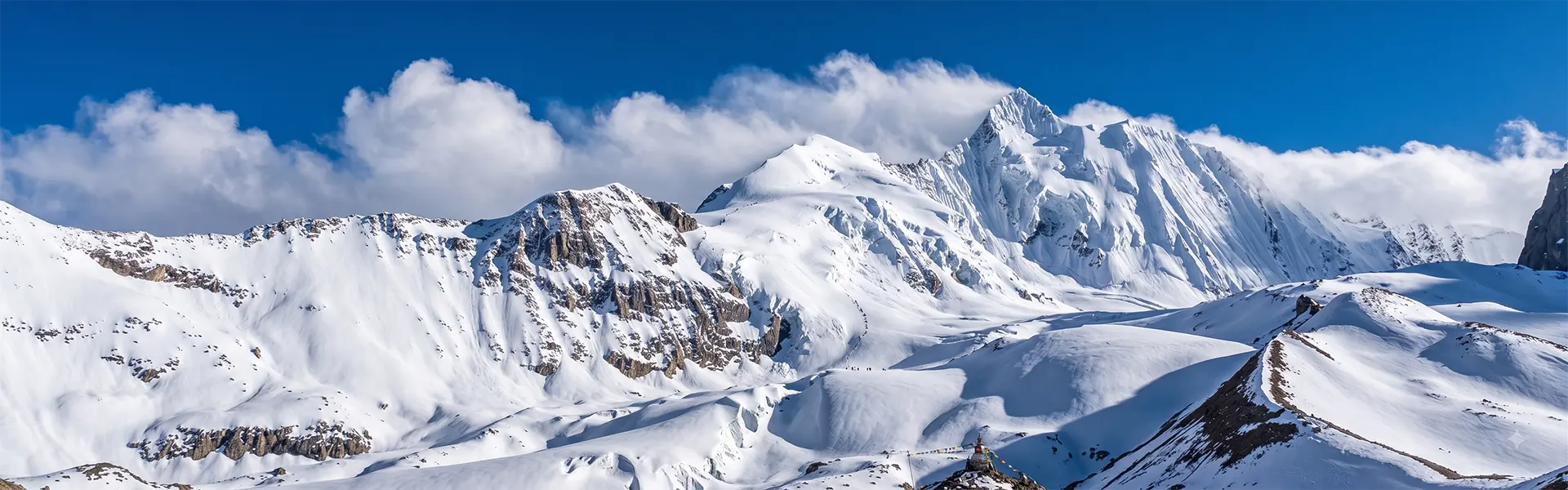
The Lower Dolpo Trek takes you into a remote region of western Nepal where high mountain passes, ancient villages, alpine valleys, and centuries old Buddhist and Bon traditions remain well preserved. This remote trekking route lies in western Nepal, far from the country’s popular trekking regions, where you can experience peaceful mountain landscapes and the unique culture of Dolpo. During the majority of the trek, camping is an option to explore places with very little facilities and to enjoy the serene nature of the environment.
The trip starts with flights from Kathmandu to Nepalgunj and then to Juphal before following the trails along the Thuli Bheri River. Gradually, forests and narrow gorges, as well as traditional settlements, yield to high alpine terrain and open valleys as the trek progresses. The route crosses Numa La Pass and Baga La Pass before reaching Ringmo, a beautiful village overlooking the turquoise waters of Shey Phoksundo Lake. You will also encounter local people, explore ancient monasteries, and have spectacular views of the Himalayan landscapes around.
In Nepal Wanderlust Treks, each aspect of your trip is well planned to ensure your safety and comfort. Our highly trained guides and support staff take care of all the transportation, permits, camping gear, meals, and day-to-day logistics, so that you can fully appreciate the adventure and get to know the culture and traditions of the Dolpo region.
In our Lower Dolpo Trek Itinerary, we have an acclimatization day in Dolpo at Dho Tarap so that your body can acclimatize to the high mountain passes. The 18 Days Lower Dolpo Trek suits well those trekkers who are physically fit, and like remote camping experiences. This is a wonderful trip in case you wish to explore isolated Himalayan valleys, classic mountain societies, as well as the charm of Phoksundo Lake Trek.
Itinerary of Lower Dolpo Trek
Arrival at Kathmandu Airport
When you first arrive at Tribhuvan International Airport in Nepal, a representative of Nepal Wanderlust Treks will meet you and take you to your hotel in Kathmandu. You can enjoy yourself after the flight or go sightseeing in the surrounding streets, provided that you have time.
The Lower Dolpo Trek will begin in the evening with a briefing trek where the guide will describe the itinerary, discuss your equipment and clarify any questions you may have. One night stay in Kathmandu.
Kathmandu Valley Sightseeing and Trek Preparation
After breakfast, we will explore some of Kathmandu Valley’s important cultural and historical landmarks. The sightseeing tour will provide an overview of the rich history, traditional architecture and religious heritage of Nepal before we move on to the remote Dolpo region.
Returning to the hotel, there will be enough time to organize your trekking gear or purchase any last minute essentials. Our team will complete the permit formalities and make the final preparations for tomorrow’s flight to Nepalgunj.
Fly from Kathmandu (1,400 m) to Nepalgunj (150 m)
This morning, we will board a domestic flight to Nepalgunj, a busy city in the lowlands of western Nepal near the Indian border. The aerial sight of the hills can be felt during the flight till the landscape shifts to the broad plains of the Terai.
Once in Nepalgunj, we will move to the hotel and the rest of the day will be at the hotel to relax. This overnight stay also helps prepare for the early morning mountain flight to Juphal.
Fly from Nepalgunj (150 m) to Juphal (2,475 m) and Trek to Dunai (2,850 m)
An early morning flight takes us into the mountains, landing at Juphal after spectacular views of western Nepal. We will start trekking down the airstrip, through the cultivated fields and small villages and arrive at Dunai, the administrative center of Dolpo.
Once you have settled in our campsite, you can visit the village and enjoy the relaxed atmosphere of this remote mountain settlement before having dinner with the trekking crew.
Trek from Dunai (2,850 m) to Tarakot (2,545 m)
Leaving Dunai behind, we will follow the trail beside the Thuli Bheri River through forests, narrow valleys, and traditional villages. The trail is also fairly mild and we are able to appreciate the landscape as we slowly enter more into Dolpo territory.
In the afternoon we will reach Tarakot, an ancient fortress village, which was a major trading station. Once the camp is set up, we will have time to sightsee in the village after which we will settle down to sleep.
Trek from Tarakot (2,545 m) to Laini (3,170 m)
After breakfast, we will leave Tarakot and follow the Tarap Khola through narrow valleys and peaceful forests. The road traverses a number of suspension bridges and small grazing grounds and then slowly ascends to more isolated scenery. The landscape turns quieter with fewer villages.
By afternoon, we will reach Laini, a small camping area surrounded by steep hills and mountain landscapes. Once in camp, it will be time to rest and to get ready to the elevations that will come.
Trek from Laini (3,170 m) to Nawarpani (3,545 m)
The trail today follows the Tarap River and passes through deep gorges, rocky paths and open valleys. We will slowly ascend in the midst of waterfalls, alpine vegetation, and amazing cliffs that emphasize the ruggedness of the Dolpo area.
By late afternoon, we will arrive at Nawarpani, a peaceful campsite beside the river. The air of the mountains and the silent environment offer the best spot to take a rest before moving on to the high valley of Dho Tarap.
Trek from Nawarpani (3,545 m) to Dho Tarap (3,940 m)
Leaving Nawarpani, we will continue along a wide valley as the landscape gradually opens into broad alpine meadows. As we near Dho Tarap, the influence of Tibet is great as traditional stone houses, prayer flags, and cultivated fields are evident.
You can visit this beautiful high altitude village on reaching Dho Tarap and see the daily life of the local people. We will stay here all night to prepare the next day of acclimatization.
Acclimatization Day in Dho Tarap (3,940 m)
Today is reserved for acclimatization before crossing the high mountain passes. We will go on a small hike in Dho Tarap, to familiarize our bodies with the altitude whilst viewing the nearby valleys and mountains. The walk is also a chance to see monasteries and get to know about the traditional Bon and Tibetan Buddhist culture.
After coming back to the camp, the rest of the day is at liberty to rest, observe the beautiful environment, and get ready to face the difficult days.
Trek from Dho Tarap (3,940 m) to Numa La Base Camp (4,440 m)
We will depart Dho Tarap after breakfast and head on a gradual ascent to Numa La Base Camp. The path traverses open alpine meadows, grazing fields and mountainous mountain hollows and provides more and more broad panoramas of the surrounding mountains.
Once we have arrived to the base camp, our support team will set up camp, meanwhile, you will take time to rest and appreciate the mountainous view. An early night is recommended before crossing Numa La Pass the following day.
Cross Numa La Pass (5,190 m) and Trek to Pelung Tang (4,445 m)
The day is one of the most difficult and memorable days of the trek. We will make an early start and climb steadily to Numa La Pass, the highest point of the journey. On the pass, have broad perspectives of snow covered mountains, rugged valley and the distant Dolpo scenery before commencing the descent.
The trail descends through rocky slopes and alpine valleys before reaching Pelung Tang. Once we reach our campsite, we will have time to rest and prepare to cross another high pass tomorrow.
Cross Baga La Pass (5,070 m) and Trek to Dajok Tang (4,080 m)
We will ascend slowly after breakfast to Baga La Pass, another magnificent spot with the Himalayan peaks, and open alpine scenery. The path has some of the most beautiful mountain views then back down through grassy hills and rocky pathways to the next camping area.
By afternoon we will arrive at Dajok Tang, and a quiet camping ground amid mountain ridges. The rest of the day is at leisure to rest and take in the peaceful ambience following another successful day in the high Himalayas.
Trek from Dajok Tang (4,080 m) to Ringmo (3,600 m)
We will leave Dajok Tang and will pass through the woods of pine and juniper with the view of the valleys round changing. Onward, as the trail descends, the renowned turquoise waters of Shey Phoksundo Lake slowly appear.
In the afternoon, we will reach Ringmo, an ancient village overlooking Shey Phoksundo Lake. After setting up camp, you can take a short walk around the village and enjoy the peaceful surroundings before spending the night nearby.
Rest Day at Ringmo and Hike to Shey Phoksundo Lake (3,612 m)
We spend the day today exploring the area around Ringmo and Shey Phoksundo Lake which is the deepest lake in Nepal. We will have a leisurely walk on the lake bank and admire the clear blue waters, the cliffs and the serene mountainous views. You can also go to local viewpoints or visit Ringmo village.
The rest of the day is at liberty to relax and enjoy the scenic beauty before starting the journey back tomorrow.
Trek from Ringmo (3,600 m) to Shyanta (2,520 m)
We will depart Ringmo after breakfast and follow our way down through the forests, rocky paths and narrow valleys to Shyanta. The road runs along rivers and waterfalls and on its way, it passes through several tiny settlements.
As we lose elevation, the landscape becomes greener and the warmer climate returns. When we arrive at Shyanta, we will camp and have our last night in the Dolpo area before we finish the trek.
Trek from Shyanta (2,520 m) to Juphal (2,475 m)
This is the last day of trekking. We will follow a scenic trail through cultivated fields, small villages, and forested hillsides while gradually making our way back to Juphal. The road is the last chance to experience the quiet Dolpo valley and the traditional mountain life.
Once we get to Juphal we will celebrate the successful end of the trek with our trekking crew. The night is free to rest and get ready to the next day early flight.
Fly from Juphal (2,475 m) to Kathmandu (1,400 m) via Nepalgunj (150 m)
We will take an early morning flight from Juphal to Nepalgunj, followed by a connecting flight to Kathmandu. During the journey, enjoy your final aerial views of the mountains, deep valleys, and rolling hills of western Nepal before returning to the capital.
When you get to Kathmandu, we will drive you to the hotel. The remaining day is at leisure to either rest, sightsee or have some shopping of souvenirs before you leave the city.
Final Departure
Today you arrive at the end of your 18 Days Lower Dolpo Trek. We will drop you at Tribhuvan International Airport to continue your journey as per your flight schedule.
Thank you for choosing Nepal Wanderlust Treks. We hope you leave Nepal with lasting memories of the remote valleys, high mountain passes, and the beautiful landscapes experienced during your Phoksundo Lake Trek. We hope to see you once again in another Himalayan adventure.
Includes/Excludes
What's Included?
- Airport arrival and departure transfers by private vehicle.
- Three nights hotel accommodation in Kathmandu with breakfast.
- Kathmandu sightseeing tour with a private vehicle and professional guide.
- Domestic flights: Kathmandu to Nepalgunj, Nepalgunj to Juphal, and return flights via Nepalgunj to Kathmandu.
- Fully supported camping accommodation throughout the trek.
- Sleeping tents, dining tent, kitchen tent, toilet tent, tables, chairs, and all necessary camping equipment.
- Three freshly prepared meals a day during the trek (breakfast, lunch, and dinner).
- Seasonal fresh fruits after dinner during the trek.
- Experienced, government licensed English speaking trekking guide.
- Professional camping crew, including cooks and support staff.
- One porter for every two trekkers (maximum 20 kg combined luggage).
- Guide and staff salary, meals, accommodation, insurance, and equipment.
- Lower Dolpo Restricted Area Permit.
- Shey Phoksundo National Park Entry Permit.
- Trekking map and duffel bag for use during the trek.
- Comprehensive first aid kit carried by the guide.
- All government taxes and company service charges.
What's Excluded?
- International airfare to and from Nepal.
- Nepal entry visa fee.
- Lunch and dinner in Kathmandu.
- Travel insurance, including emergency helicopter evacuation.
- Sleeping bag and other personal trekking gear (can be hired if necessary).
- Bottled water, soft drinks, alcohol, and extra snacks Personal expenses, laundry, phone calls, internet, charging facilities, and hot showers where available.
- Tips for guide, porters, and camping staff.
- Costs incurred due to delays in flights, weather conditions, natural disasters, strikes, or other unforeseen circumstances.
- Any other services not mentioned in the Cost Includes section.
Essential Information - Lower Dolpo Trek
Best Time for the Lower Dolpo Trek
The best months to do the Lower Dolpo Trek are spring (March-May) and autumn (September-November). The weather is normally pleasant during these months with warm days and clear mountain skies. The lower valleys are also enhanced with colorful rhododendron blooms in spring and the air and view are also good in the fall following the monsoon.
Since Dolpo is located in a remote area of the Himalayas, weather may shift rapidly in elevated areas. During winter, there is excessive snowfall on the Numa La and Baga La passes, and during the monsoon season, flights to Juphal may be delayed due to weather conditions. Our Lower Dolpo Trek Itinerary in spring or autumn offers the best and safest trekking conditions.
Difficulty of the Lower Dolpo Trek
Lower Dolpo Trek is a difficult camping trek, which is recommended to experienced trekkers or those of good physical fitness. Walks tend to be between 5 and 8 hours long with long ascents, steep descents and two high mountain passes which are over 5,000 meters in elevation. The distance and the inadequate facilities make the climb more challenging than most of the mainstream trails in Nepal.
It is always advisable to prepare before your trip by engaging in regular hiking, cardio and endurance training. Our professionally trained guides have a steady speed and allow ample rest and acclimatization time during the trip.
Accommodation and Meals
You will spend the night in a hotel at Kathmandu and fully furnished camps in the course of the trekking trail during the Lower Dolpo Trek. Each of the overnights is equipped with comfortable sleeping tents, a dining tent, kitchen tent, and other camping gear which are set up by a support crew to enable you to have a comfortable camping experience in the remote mountain locations.
Freshly prepared breakfast, lunch, and dinner are served throughout the trek. When possible, our camping group cooks healthy food using local ingredients to keep you active during the trip.
Permits for the Lower Dolpo Trek
Lower Dolpo Trek needs a Lower Dolpo Restricted Area Permit and a Shey Phoksundo National Park Entry Permit. This is a limited trekking area and in accordance with the existing government regulations, the trek has to be done with a licensed guide.
Nepal Wanderlust Treks will take care of all the necessary permits prior to the start of your trek. All you have to submit is your passport information and passport size photographs, and all the formalities will be done by our team before you arrive.
Travel Insurance
Lower Dolpo Trek is highly advised to be covered by travel insurance. Your policy must include high altitude trekking, over 5,000 meters, emergency helicopters, medical treatment, cancellation of trips, and personal property.
The trek passes through remote mountain regions where medical facilities are very limited. Comprehensive travel insurance helps cover the cost of emergency helicopter evacuation, medical treatment, and other unexpected expenses if an emergency occurs during your Phoksundo Lake Trek.
Most Asked Questions by Travellers
Lower Dolpo is characterized by remote mountain scenery, traditional Tibetan culture, high mountain passes and beautiful Shey Phoksundo Lake.
Yes. Lower Dolpo is a restricted trekking area, and trekkers require a Restricted Area Permit and a Shey Phoksundo National Park Entry Permit.
The highest point is Numa La Pass at 5,190 meters, followed by Baga La Pass at 5,070 meters.
Yes. The majority of the nights are in fully supported camps since there is limited accommodation along the way.
The Shey Phoksundo Lake is the deepest lake in Nepal and is characterized by the clear turquoise water, sharp cliffs and serene environment.
Yes. Bon traditions can be found in a few villages in Lower Dolpo, together with Tibetan Buddhism, which is a cultural experience.
Yes. Flights between Nepalgunj and Juphal are weather sensitive and may be delayed or rescheduled during poor weather conditions.
Yes. Skilled trekkers who have more time may join Lower Dolpo with upper Dolpo in order to explore remote areas.
Reviews on Lower Dolpo Trek
Be first to post a review in this trip.