
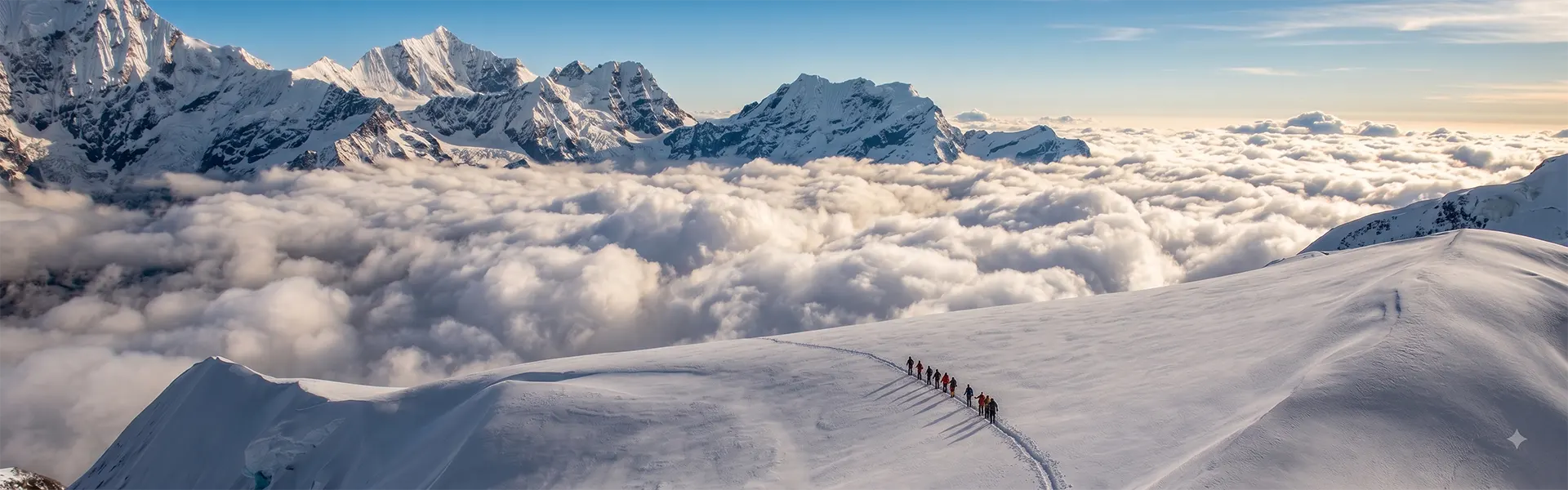
Mera Peak Climbing
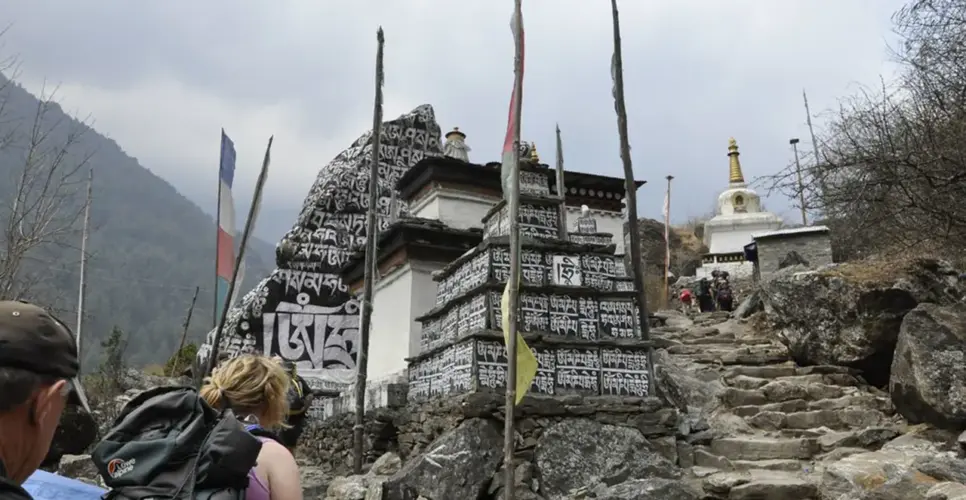
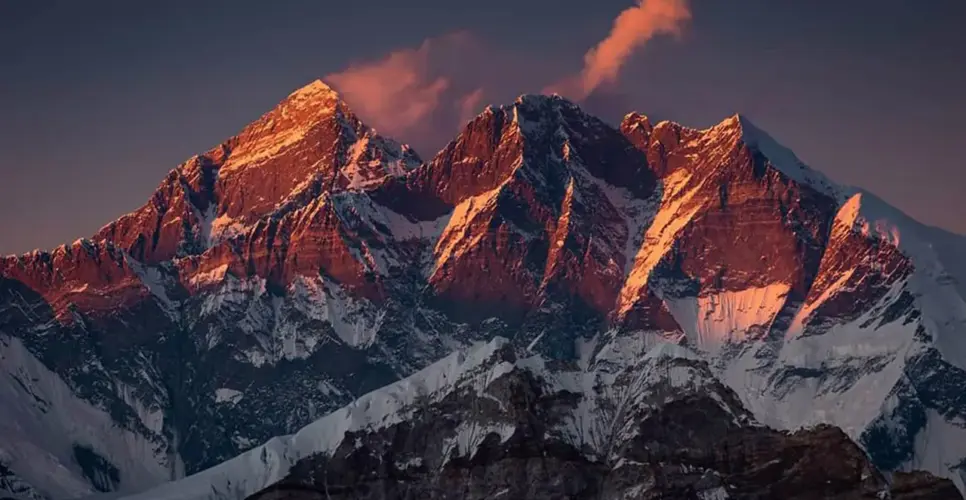
Trip Highlights of Mera Peak Climbing
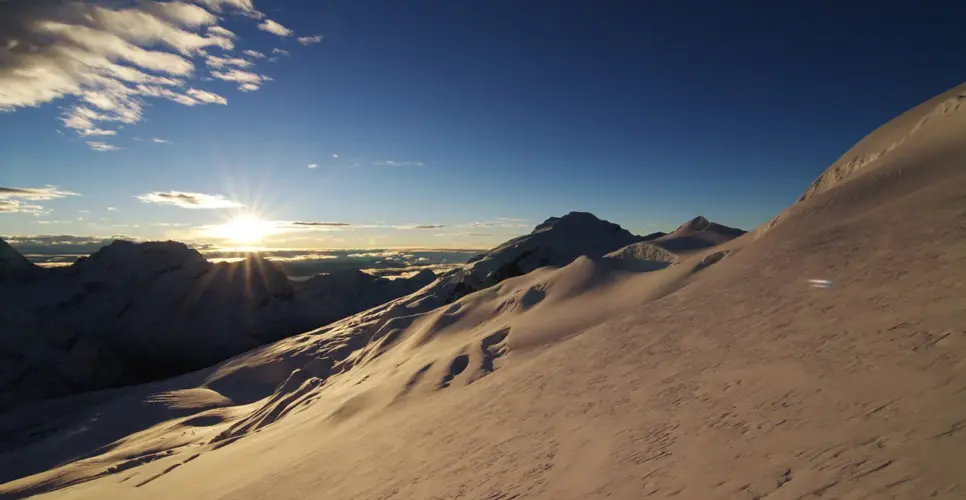
- Summit Mera Peak at 6,476 m, Nepal’s highest trekking peak.
- Trek through the peaceful and less crowded Hinku Valley.
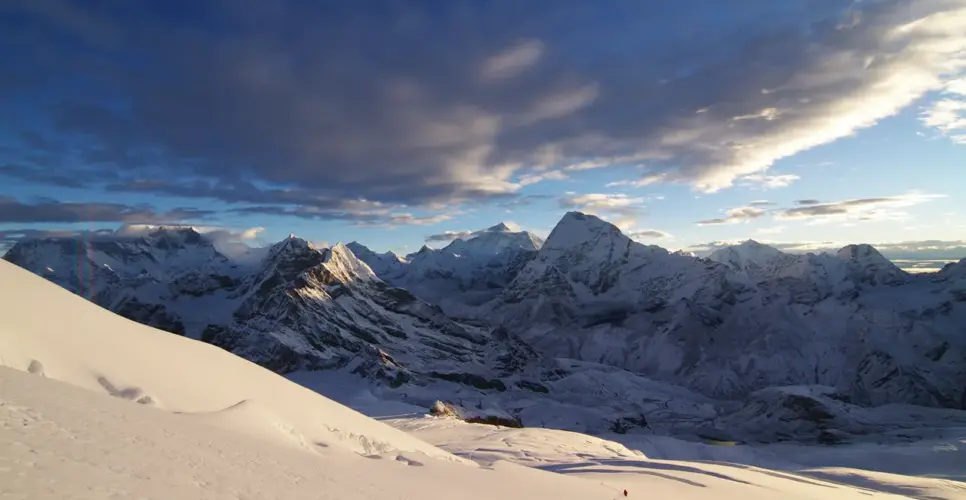
- Savor the panoramic views of Everest, Makalu, Lhotse, Cho Oyu and Kanchenjunga.
- Cross the Mera Glacier on the way to the summit.
- One night at Mera High Camp prior to the summit ascent.
- Pass scenic Zatrwa La Pass on the way back.
- Experience both Himalayan trekking and peak climbing in one adventure.
Overview of Mera Peak Climbing
The Mera Peak Climbing is a 17 day adventure in the Himalayan region that incorporates both remote Himalayan trekking through the Hinku Valley, as well as the challenge of climbing the highest trekking peak in Nepal 6,476 meters. The path will lead you out of the crowded Everest Base Camp trail into a less congested section of the Everest region, through forests, rivers, alpine meadows, glaciers, and the traditional Sherpa villages of the Everest region, which provides a diverse and enjoyable experience of climbing.
This trip is suitable for trekkers who aim to climb their first Himalayan peak above 6,000 meters. A carefully planned itinerary, gradual acclimatization, and experienced climbing guides help improve safety and increase the chances of a successful summit.
Our Mera Peak Climbing Package begins with your arrival in Kathmandu, followed by sightseeing and final climbing preparations before flying to Lukla. The trail goes on there through Paiya, Panggom, Ningsow, Chhatra Khola, Kothe, Thangnak and Khare. The days will consist of gradual increase in altitude each day, so that your body will have time to adapt before progressing to elevated levels.On the trail, you will have a serene mountain walk, scenic routes and lesser numbers of people than the main Everest trekking paths.
A full acclimatization day at Khare is included before the summit push. During the acclimatization day, our experienced climbing guides will teach you how to use crampons, harnesses, ice axes, ascenders, and fixed ropes.Before heading to Mera High Camp, you will learn basic glacier travel techniques and safety procedures.
The summit day starts early in the morning before sunrise as you cross the glacier and head for the summit of Mera Peak. From the summit you can get a panoramic mountain views of Mount Everest, Lhotse, Makalu, Cho Oyu and Kanchenjunga amongst others. After celebrating your success you will descend to Khare and retrace your steps via Kothe and Thuli Kharka, crossing the Zatrwa La Pass on your way back to Lukla.
This Mera Peak Climbing Itinerary is designed to combine adventure with safety, allowing plenty of time to acclimatize properly throughout the trek. Whether you are climbing your first Himalayan peak or preparing yourself for more demanding expeditions, our experienced team will provide the guidance, support and logistics to make your Mera Peak Expedition safe, fun and memorable.
Itinerary of Mera Peak Climbing
Arrival in Kathmandu (1,400 m / 4,593 ft)
Once in Tribhuvan International Airport, our representative will pick you up and take you to Kathmandu Hotel. After checking in, you can relax after the journey or to explore the surrounding area in case you have the time.
We will conduct a trip briefing in the evening that will include the introduction of your climbing guide, a review of the itinerary, inspection of your equipment, and answering any questions before you start the expedition.
Kathmandu Sightseeing and Preparation to climb
We have a free day to explore the city and do last minute preparations before going into the mountains. We will visit many World Heritage Sites of the UNESCO, like Pashupatinath Temple, Boudhanath Stupa or Kathmandu Durbar Square where you can learn more about Nepal culture and history.
We will inspect your climbing gear later on, and can assist in renting climbing gear as necessary. Your guide will also discuss the climbing strategy, altitude precautions and safety procedures of the expedition.
Fly to Lukla and Trek to Paiya (Chutok) (2,730 m / 8,957 ft)
The adventure starts with an early morning flight from Kathmandu to Lukla. After meeting our trekking crew, we will leave the main Everest Base Camp trail and follow a quieter route toward the Hinku Valley through forests, hillside paths, and small mountain villages.
The path has a few small ascents and descents that lead to Paiya, a serene village with green hills. We will spend the night here and prepare for the next stage of the trek.
Trek from Paiya to Panggom (2,850 m / 9,350 ft)
We will then come down through the forest-trails after breakfast then cross a suspension bridge over the Dudh Koshi River. The path then ascends gradually through rhododendron and bamboo groves, and past some little hamlets.
By afternoon, we will reach Panggom, a traditional Sherpa village surrounded by peaceful mountain scenery. It is a peaceful spot where we are able to get a glimpse of local life off of the busier trekking paths.
Trek from Panggom to Ningsow (2,863 m / 9,393 ft)
The trail today is through forests and open ridges and we shall go on further into the Hinku Valley. We pass by a series of small streams and remote settlements on our way and relax in the quiet environment and occasional mountain vistas.
We will reach the little village of Ningsow by the end of the afternoon, and here shall we stay the night. The gradual rise today assists us to be ready to the higher altitudes in the coming days.
Trek from Ningsow to Chhatra Khola (2,800 m / 9,186 ft)
After breakfast, we will continue through dense rhododendron and pine forests before climbing to a ridge with occasional mountain views. The road then turns into the quiet Hinku Valley, and passes through some of the quiet wood walks, crossing a number of little brooks on the way.
By afternoon we shall arrive at Chhatra Khola, a small hamlet on the river. It is a beautiful place to have a rest before proceeding to loftier heights, and is bordered with woods and hills.
Trek from Chhatra Khola to Kothe (3,691 m / 12,109 ft)
Today’s trail follows the Hinku River as we will make our way deeper into the valley. The path goes through wonderful pine and rhododendron forests and slowly transcends into the alpine regions with beautiful mountainous scenery.
By late afternoon, we will reach Kothe, a small village where the trekkers and climbers have a significant destination on their route to Mera Peak. The higher elevation also helps us continue our gradual acclimatization.
Trek from Kothe to Thangnak (4,358 m / 14,297 ft)
We will leave Kothe behind and go up the Hinku River in a gradually rugged land. The trail passes glacial streams, yak grazing areas, and rocky terrain while the surrounding snow covered peaks become more prominent as we gain altitude.
In the afternoon we shall reach Thangnak, a small seasonal village at the feet of towering mountains. The light air is a reminder that we are in the high Himalayan atmosphere.
Trek from Thangnak to Khare (5,045 m / 16,552 ft)
Today’s trek is shorter but involves a steady climb toward Khare. We will pass next to the Dig Glacier and over rocky moraine as we are getting closer and closer to Mera Peak and the rest of the mountains.
After reaching Khare, we will have time to rest, enjoy the mountain scenery, and prepare for the acclimatization day. It is the last permanent camp before the climbing part.
Acclimatization at Khare and Pre Climb Training
Today is set aside for acclimatization before moving to higher elevations. Our day will be used to acclimatize the bodies to the altitude to increase the likelihood of a successful and safe summit and decrease the risk of altitude sickness.
Later, we will take part in a practical climbing session led by our experienced guides. Before climbing to Mera High Camp, you will learn to use crampons, harnesses, ice axes, ascenders, and fixed ropes.
Trek from Khare to Mera High Camp (5,780 m / 18,963 ft)
Today is the first day of the climbing part. We will depart Khare after breakfast and proceed in a gradual ascension across the Mera Glacier with climbing gear where necessary. As we gain altitude, the surrounding Himalayan peaks become even more impressive.
Later in the afternoon, we will reach the Mera High Camp where our group will do final preparations to the peak climbs. After an early dinner and a final briefing, we will rest to prepare for an early morning start.
Summit Mera Peak (6,476 m / 21,247 ft) and Trek Back to Khare (5,045 m / 16,552 ft)
The summit day begins well before sunrise. We will carry headlamps and climbing equipment, cross the glacier, and then ascend to the summit of Mera Peak. The peak provides a spectacular sight of Mount Everest, Lhotse, Makalu, Cho Oyu, Kanchenjunga and a variety of other Himalayan ranges.
After spending some time at the summit, we will carefully descend to High Camp and continue back to Khare for a well deserved rest after a long and rewarding day.
Trek from Khare to Kothe (3,691 m / 12,109 ft)
After breakfast, we will retrace our route through Thangnak and continue downhill toward Kothe. When we come down the air gets more comfortable, and the landscape is evolving, returning us to alpine meadows and riverside trails.
By afternoon, we will arrive in Kothe, where we can relax and celebrate the successful summit before continuing the return journey.
Trek from Kothe to Thuli Kharka (4,300 m / 14,108 ft)
Leaving Kothe behind, we will follow a steady uphill trail through forests of pine and rhododendron. As the climb continues the route opens onto ridges with beautiful views of the surrounding mountains and valleys.
In the late afternoon we will arrive at Thuli Kharka, a small mountain village where we shall stay the night before traversing the Zatrwa La Pass the next day.
Trek from Thuli Kharka to Lukla via Zatrwa La Pass (4,610 m / 15,125 ft)
Today is the final day of trekking. We will begin with a climb to the Zatrwa La Pass, one of the highest points on the return route. The excellent views of the Himalayan peaks surrounding the pass are given due to clear weather before the trail goes down towards Lukla.
Upon arrival at Lukla we will celebrate the end of the expedition with our trekking crew and spend our last night in mountains.
Fly from Lukla to Kathmandu
In the morning, we will take a picturesque flight back to Kathmandu. The brief flight will be the final chance of seeing the Himalayan terrain before flying back to the capital. Our representative will pick you up and take you to your hotel.
The remainder of the day is at leisure, to sightsee or even do some shopping of souvenirs. You can also decide to celebrate the successful completion of your Mera Peak Climbing adventure in the evening.
Final Departure
Your Mera Peak Expedition comes to an end today. Depending on your flight schedule, we will transfer you to Tribhuvan International Airport for your onward journey.
We hope you leave Nepal with wonderful memories of your climbing adventure, the Himalayan landscapes, and the warm hospitality you experienced during the expedition. We hope to welcome you again for another adventure in Nepal.
Includes/Excludes
What's Included?
- Airport arrival and departure transfers by private vehicle.
- Two nights hotel accommodation in Kathmandu with breakfast.
- Domestic flights between Kathmandu and Lukla, including airport taxes.
- All ground transportation as per the itinerary.
- Twin sharing teahouse accommodation during the trek.
- Tented accommodation at Mera High Camp.
- Three meals a day (breakfast, lunch, and dinner) during the trek and climb.
- Experienced government licensed trekking guide and climbing guide.
- Porters (one porter shared between two trekkers).
- Mera Peak climbing permit.
- Makalu Barun National Park entry permit.
- Local area entry permits where required.
- Pre climb training at Khare.
- Group climbing equipment including ropes and necessary safety gear.
- Comprehensive first aid kit carried by our team.
- Staff salary, food, accommodation, insurance, and equipment.
- All government taxes and company service charges.
What's Excluded?
- Nepal entry visa fee.
- International airfare to and from Nepal.
- Lunch and dinner in Kathmandu.
- Personal climbing equipment and trekking gear.
- Equipment rental in Kathmandu.
- Travel insurance covering high altitude trekking, peak climbing above 6,000 meters, and emergency helicopter evacuation.
- Personal costs, including laundry, hot showers, telephone calls, internet, charging fees, and beverages.
- Bottled drinks, snacks and alcoholic drinks.
- Guide, porter and climbing staff tips.
- Additional accommodation and meals because of delay in flights, unfavorable weather or early expedition termination.
- Any expenses incurred due to natural disasters, political unrest, or other events that are beyond our control.
- Any other services not listed in the Cost Includes section.
Essential Information - Mera Peak Climbing
Mera Peak Climbing Difficulty
Mera Peak Climbing is considered a moderately challenging Himalayan expedition. The peak is the highest trekking peak in Nepal, but the mountain does not need any advanced technical mountaineering skills. The most significant factors in a successful summit are good physical fitness, prior experience in trekking and proper acclimatization.
The greatest difficulty is the altitude and not the climbing itself. Good endurance is needed on the long trekking days, on the glacier travel and cold temperatures. This Mera Peak Climbing Itinerary is appropriate to trekkers who are attempting their first peak of above 6,000 meters because our skillful climbing guides offer pre climb training and guidance during the entire process.
Accommodation and Meals
Accommodation is offered during the trek in local teahouses with basic but comfortable twin sharing rooms. Before the summit climb, we are accommodated at Mera High Camp where we stay in a fully equipped tented camp. The facilities are simpler at higher levels but include all the amenities necessary to spend the night comfortably.
During the trek, there are meals such as breakfast, lunch, and dinner. The menu typically includes Dal Bhat, noodles, rice, soup, potatoes, pasta, eggs, vegetables, and local food of the season. Mera Peak Climbing Package will make sure that you have freshly cooked meals to keep you energized throughout the expedition.
Transportation
The trip starts and finishes in Kathmandu with picturesque domestic flights between Kathmandu and Lukla. These flights are attractive with a view of the Himalayan range and they save a lot of time traveling to the Everest region. During the busy spring and autumn trekking seasons, flights to and from Lukla often operate via Manthali Airport in Ramechhap instead of Kathmandu due to air traffic management.
In Kathmandu, transfers to the airports are made by private vehicles. During the Mera Peak Expedition, all the trekking is done on foot with your luggage being transported by porters thus enabling you to enjoy the trail with a light daypack.
Travel Insurance
Mera Peak Climbing requires travel insurance due to the mountain setting and the high altitude. Your policy must cover trekking and climbing above 6,000 meters, emergency medical treatment, helicopter evacuation, cancellation of the trip and personal accidents.
The weather in the Himalayas is unpredictable and it is rather usual to see flight delays in the Everest region. Ensure that your insurance policy covers all activities included in the expedition before your trip begins.
Most Asked Questions by Travellers
Previous mountaineering experience is not essential, but you should have experience trekking at high altitude. The climbing guides offer pre climb training prior to the summit, hence, making the climb beginner friendly with good physical conditioning.
The average trekking day is 5-7 hours, with the trail and elevation. Summit day is the longest and usually takes around 10 to 12 hours, including the ascent and descent.
Yes. Our climbing team carries emergency oxygen and a first aid kit throughout the expedition. They are used only in emergencies when necessary.
A porter typically transports 20 to 25 kg of baggage between two trekkers. We suggest that you should just pack your own duffel bag to within the recommended weight range, and only bring a small daypack yourself.
Yes. There are numerous reputable gear rental stores in Kathmandu where you can rent climbing boots, crampons, harnesses, sleeping bags, down jackets, ice axes, and other necessary gear in case you do not bring your own equipment.
The first thing is your safety. When your guide thinks that going to the peak might be dangerous to your health, you will come down to a lower altitude. Weather conditions and altitude can sometimes prevent a summit attempt, even with proper preparation.
The majority of teahouses on the way offer the opportunity to charge electronic equipment. Charging can be an extra fee at higher altitudes, so it is advisable to carry a power bank.
Yes. Many climbers choose to spend extra time in Kathmandu or combine the expedition with other trekking or sightseeing activities in Nepal. In case you wish to stay longer, we can assist in making other traveling arrangements.
Reviews on Mera Peak Climbing
Be first to post a review in this trip.